
Different Types of Hernia Explained
Different Types of Hernia Explained
A hernia is a common medical condition that occurs when an internal organ or tissue pushes through a weak spot in the surrounding muscle or tissue wall. Hernias can develop in different parts of the body and may cause pain, swelling, or discomfort, especially during physical activity.
Many people ignore hernia symptoms in the early stages, but timely diagnosis and treatment are important to prevent complications. Understanding the different types of hernia explained in simple terms can help patients recognize symptoms early and seek proper medical care.
What is a Hernia?
A hernia develops when there is weakness or strain in the muscles or connective tissues that normally hold organs in place. This allows tissue or part of an organ to protrude outward through the weakened area, creating a visible or painful bulge.
Hernias are commonly seen in the abdomen and groin area but can also occur in other parts of the body.
Common Symptoms of Hernia
The symptoms may vary depending on the type and size of the hernia.
Common hernia symptoms include:
- Visible lump or swelling
- Pain or discomfort while lifting
- Heaviness in the abdomen
- Burning or aching sensation
- Swelling that increases while coughing or straining
- Weakness or pressure in the groin
Some hernias may remain painless in the beginning and gradually worsen over time.
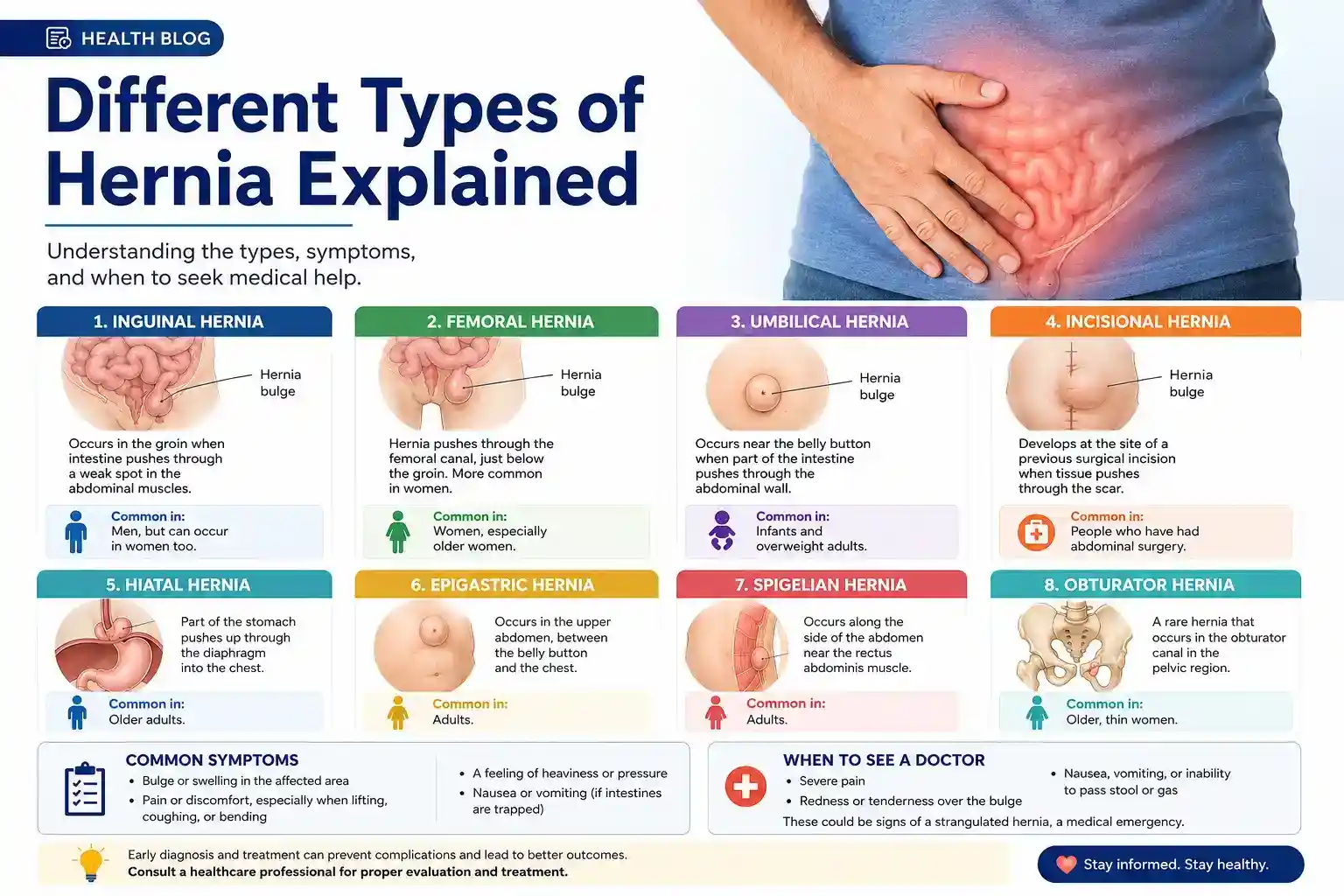
Different Types of Hernia Explained
There are several types of hernias, each affecting different areas of the body.
1. Inguinal Hernia
Inguinal hernia is the most common type of hernia and occurs in the groin region.
It develops when tissue or part of the intestine pushes through a weak spot in the lower abdominal wall.
Common Symptoms
- Bulge in the groin
- Pain while bending or lifting
- Swelling near the testicles in men
- Discomfort during physical activity
Inguinal hernias are more common in men.
2. Umbilical Hernia
An umbilical hernia occurs near the belly button when tissue pushes through the abdominal wall.
This type is commonly seen in infants but can also affect adults, especially after pregnancy or weight gain.
Symptoms
- Swelling near the navel
- Mild discomfort
- Bulge that becomes noticeable while coughing or standing
3. Hiatal Hernia
A hiatal hernia occurs when part of the stomach moves upward through the diaphragm into the chest cavity.
Common Symptoms
- Acid reflux
- Heartburn
- Chest discomfort
- Difficulty swallowing
- Bloating
Hiatal hernias are often associated with acidity and GERD symptoms.
4. Incisional Hernia
An incisional hernia develops at the site of a previous surgical incision.
Weakness in the surgical scar can allow tissue to protrude outward.
Risk Factors
- Previous abdominal surgery
- Obesity
- Heavy lifting
- Poor wound healing
Symptoms
- Swelling near a surgical scar
- Pain during movement
- Abdominal discomfort
5. Femoral Hernia
Femoral hernias occur in the upper thigh or groin area and are more common in women.
Although less common, they can become dangerous if untreated.
Symptoms
- Lump near the upper thigh
- Groin pain
- Discomfort while standing
6. Epigastric Hernia
An epigastric hernia occurs in the upper abdomen between the chest and belly button.
It develops when fat pushes through weak abdominal muscles.
Symptoms
- Small lump in the upper abdomen
- Pain during coughing or lifting
- Tenderness in the affected area
Causes of Hernia
Several factors can increase the risk of developing a hernia.
Common Causes Include:
- Weak abdominal muscles
- Heavy lifting
- Chronic coughing
- Obesity
- Constipation
- Pregnancy
- Aging
- Previous surgeries
Increased pressure inside the abdomen can worsen muscle weakness and lead to hernia formation.
Can Hernias Become Dangerous?
Yes, untreated hernias can lead to serious complications.
Possible Complications
1. Obstruction
Part of the intestine may become trapped, leading to bowel obstruction.
2. Strangulated Hernia
A strangulated hernia occurs when blood supply to the trapped tissue gets cut off.
This is a medical emergency and may cause:
- Severe pain
- Vomiting
- Fever
- Redness around the swelling
Immediate surgery may be required in such cases.
Treatment for Hernia
The treatment depends on the type and severity of the hernia.
1. Hernia Surgery
Surgery is the most effective treatment for hernias.
The weakened area is repaired and reinforced to reduce the risk of recurrence.
2. Laparoscopic Hernia Surgery
Laparoscopic surgery is a minimally invasive technique involving small cuts and faster recovery.
Benefits Include:
- Less pain
- Smaller scars
- Faster healing
- Short hospital stay
3. Lifestyle Changes
Doctors may also recommend:
- Weight management
- Avoiding heavy lifting
- Treating constipation
- Healthy diet and exercise
When to Consult a Doctor
Consult a surgeon if you notice:
- Persistent swelling
- Pain in the groin or abdomen
- Sudden increase in swelling
- Vomiting or severe pain
- Difficulty performing daily activities
Early diagnosis can prevent complications and improve treatment outcomes.
About Dr. Ashish Dhadas
Dr. Ashish Dhadas is an experienced general and laparoscopic surgeon associated with Samata Hospital. He specializes in hernia surgery, laparoscopic procedures, gallbladder surgery, piles treatment, and other general surgical conditions. With advanced surgical expertise and patient-focused care, Dr. Ashish Dhadas provides effective and safe treatment solutions.
Conclusion
Understanding the different types of hernia explained above can help patients identify symptoms early and seek timely medical care. Hernias may appear harmless initially, but untreated hernias can lead to serious complications over time.
If you experience swelling, discomfort, or pain in the abdomen or groin, consulting an experienced surgeon can help ensure proper diagnosis and treatment.
“Also Read: Gallbladder Pain? Here’s When You Should Visit a Specialist in Dombivli“
➝https://www.samatahospital.com/gallbladder-pain-heres-when-you-should-visit-a-specialist-in-dombivli/



No Comments
Sorry, the comment form is closed at this time.