
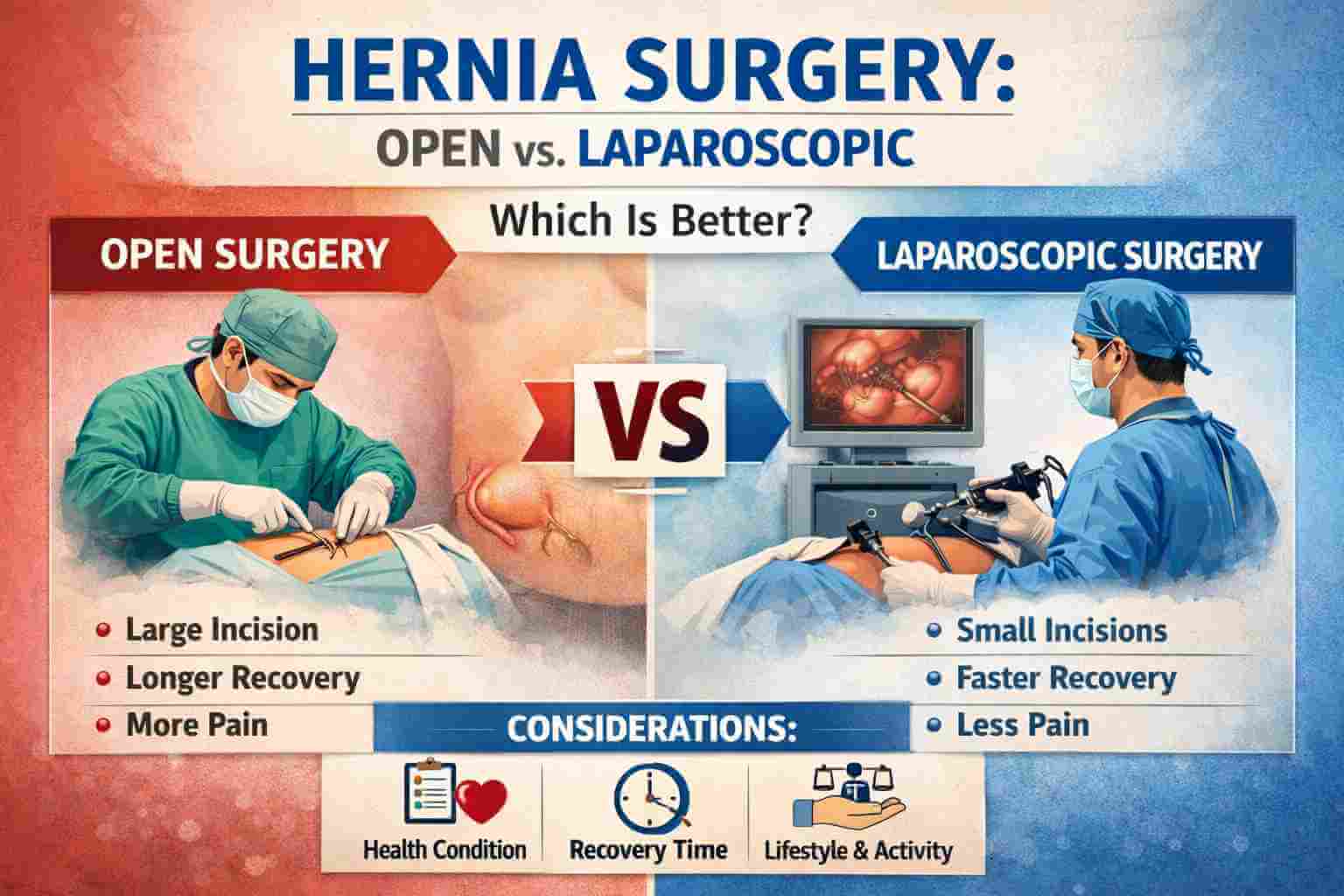
Hernia Surgery: Open vs. Laparoscopic – Which Is Better?
If you’ve been diagnosed with a hernia, one of the first questions you’re likely to ask is:
Should I go for open surgery or laparoscopic surgery?
Both are well-established, safe procedures, but the right option depends on your condition, lifestyle, and medical advice. At Samata Hospital, patients seeking hernia treatment in Dombivli are often guided through both options by experienced surgeons like Dr Ashish Dhadas, ensuring a personalised approach rather than a one-size-fits-all decision.
Let’s break it down simply.
What Is a Hernia?
A hernia occurs when an internal organ or tissue pushes through a weak spot in the muscle wall. Common types include:
- Inguinal (groin) hernia
- Umbilical hernia
- Incisional hernia
- Femoral hernia
While some hernias may remain painless initially, surgery is the only permanent treatment.
Open Hernia Surgery: The Traditional Approach
How It Works
In open hernia surgery, the surgeon makes a single incision over the hernia site, pushes the bulge back into place, and strengthens the area, often using a mesh.
Advantages
- Time-tested and reliable
- Suitable for large or complicated hernias
- Often preferred for patients unfit for general anaesthesia
Considerations
- Larger incision
- Slightly longer recovery time
- More post-operative discomfort compared to laparoscopy
Open surgery is still an excellent option, especially in certain medical scenarios, and is commonly performed by experienced surgeons like Dr Ashish Dhadas at Samata Hospital.
Laparoscopic Hernia Surgery: Minimally Invasive Option
How It Works
Laparoscopic surgery involves 2–3 small keyhole incisions. A camera and specialised instruments are used to repair the hernia from inside, usually with mesh placement.
Advantages
- Smaller cuts and minimal scarring
- Less post-operative pain
- Faster recovery and return to daily activities
- Lower risk of wound infection
Considerations
- Requires general anesthesia
- May not be suitable for very large or recurrent hernias in all cases
For many working professionals seeking hernia treatment in Dombivli, laparoscopic surgery is often preferred due to quicker recovery.
Open vs. Laparoscopic Hernia Surgery: A Quick Comparison
| Factor | Open Surgery | Laparoscopic Surgery |
| Incision size | Larger | Very small |
| Pain after surgery | Moderate | Usually less |
| Recovery time | Longer | Faster |
| Hospital stay | 1–2 days | Depends |
| Scarring | Visible | Minimal |
So, Which Hernia Surgery Is Better?
The honest answer: it depends on you.
The best choice is influenced by:
- Type and size of hernia
- Whether it’s a first-time or recurrent hernia
- Your age and overall health
- Previous abdominal surgeries
- Your daily activity level
An experienced surgeon evaluates all these factors before recommending the safest and most effective option.
Why Surgeon Experience Matters More Than the Method
Whether open or laparoscopic, the surgeon’s expertise plays a major role in outcomes.
At Samata Hospital, Dr Ashish Dhadas is known for:
- Careful evaluation before surgery
- Clear explanation of options
- Choosing the approach best suited for the patient
- Focus on safe recovery and long-term results
This patient-first approach is what makes quality hernia treatment in Dombivli truly effective.
Recovery After Hernia Surgery
Most patients can:
- Walk the same day or the next day
- Resume light activities within a few days
- Return to work in 1–2 weeks (laparoscopic) or slightly longer (open)
Heavy lifting is usually restricted for a few weeks, regardless of the method.
When Should You Consult a Hernia Specialist?
You should seek medical advice if you notice:
- A bulge that increases on coughing or standing
- Pain or discomfort in the groin or abdomen
- Burning or dragging sensation
- Sudden pain, redness, or vomiting (emergency signs)
Early consultation helps avoid complications and allows more treatment options.
Final Thoughts
Hernia Surgery: Open vs. Laparoscopic – Which Is Better?
There’s no universal answer, only the right choice for the right patient.
With expert guidance from Dr Ashish Dhadas at Samata Hospital, patients receiving hernia treatment in Dombivli can feel confident that their surgical plan is safe, personalised, and focused on long-term recovery, not just quick fixes.
“Also Read: Gallbladder Pain? Here’s When You Should Visit a Specialist in Dombivli“
➝https://www.samatahospital.com/gallbladder-pain-heres-when-you-should-visit-a-specialist-in-dombivli/





No Comments
Sorry, the comment form is closed at this time.