
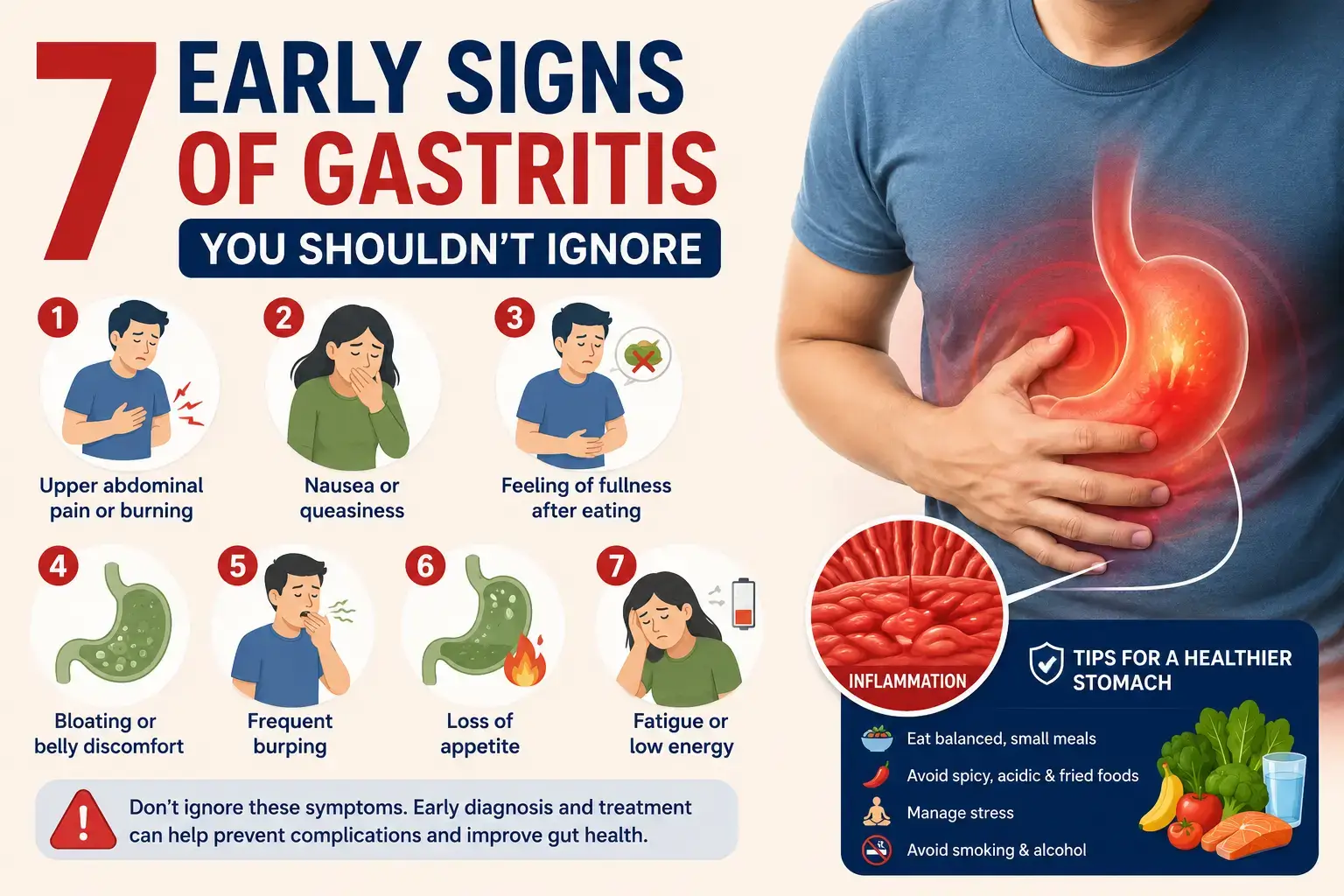
7 Early Signs of Gastritis You Shouldn’t Ignore
7 Early Signs of Gastritis You Shouldn’t Ignore
By Samata Hospital | Compassionate Care, Advanced Treatment
That burning feeling in your stomach after a spicy meal. The bloating that just won’t go away. The nausea that hits you first thing in the morning. Most of us shrug these off as “acidity” or blame it on something we ate. We pop an antacid, feel better for a while, and move on.
But what if your stomach is trying to tell you something more?
Gastritis inflammation of the stomach lining is one of the most common digestive conditions in the world, and India is no exception. It’s often mistaken for regular acidity or indigestion, which means many people live with it for months or even years without realising they need proper treatment. Left unaddressed, gastritis can progress to ulcers, chronic digestive problems, or in rare cases, something more serious.
The good news is that gastritis caught early responds very well to treatment. And the key to catching it early is knowing what to look for.
Here are 7 early signs of gastritis that you shouldn’t brush aside.
1. A Burning or Gnawing Pain in the Upper Abdomen
This is the most classic sign of gastritis a burning, aching, or gnawing discomfort in the upper part of your stomach, just below the breastbone. It may feel like a dull ache, or it can be sharp and intense.
What makes gastritis pain distinctive is its timing. It often gets worse when your stomach is empty like first thing in the morning or between meals because without food to buffer it, the stomach acid irritates the already-inflamed lining. For some people, eating actually provides temporary relief; for others, it makes the pain worse.
If you regularly experience upper abdominal pain that seems to come and go especially on an empty stomach it’s worth taking seriously rather than masking it with antacids every time.
2. Persistent Nausea
Feeling nauseous occasionally after a heavy or greasy meal is normal. But if nausea has become a regular part of your mornings or shows up frequently throughout the day without a clear cause, it could be a sign that your stomach lining is inflamed.
Gastritis causes the stomach to produce excess acid and slows down the normal process of digestion. This creates a feeling of queasiness that can linger for hours. Some people feel nauseous before eating, others after and many find it difficult to identify a clear trigger.
The tricky part is that nausea is a symptom of so many different conditions that it’s easy to dismiss. But if it’s persistent meaning it keeps coming back day after day it deserves attention.
3. Feeling Full Too Quickly (Early Satiety)
You sit down for lunch, have a few bites, and suddenly feel completely full even though you’ve barely eaten. This is called early satiety, and it’s a frequently overlooked sign of gastritis.
When the stomach lining is inflamed, it doesn’t expand and contract as efficiently as it should. The stomach also empties more slowly, meaning food sits in it longer than normal. Together, these effects create a feeling of fullness that arrives far sooner than expected, and a sense of bloating that lingers well after the meal.
People often mistake this for a “small appetite” or simply getting older. But if this is a new change for you especially alongside other symptoms your stomach lining may be the real reason.
4. Bloating and Excessive Gas
Bloating is so common in India that many people have simply accepted it as a fact of life. And while occasional bloating after a heavy meal is normal, chronic or frequent bloating especially in the upper abdomen can indicate gastritis.
When the stomach lining is inflamed, the digestive process is disrupted. Food ferments longer in the stomach, producing more gas. This leads to a distended, uncomfortable belly, frequent burping, and flatulence that doesn’t seem to improve no matter what you eat or avoid.
If you’ve tried eliminating certain foods, taking digestive aids, and adjusting your eating habits but the bloating persists, the problem may lie deeper in the lining of the stomach itself.
5. Loss of Appetite
Gastritis can take away your desire to eat not because you’re not hungry, but because eating has become associated with discomfort. When your stomach hurts, feels full too quickly, or leaves you nauseous, your brain begins to link mealtimes with unpleasantness. Over time, this can translate into a genuine loss of appetite.
You might find yourself skipping meals without feeling hungry, eating far less than you used to, or avoiding certain foods entirely because they seem to make things worse.
Unintentional weight loss can follow and if you’ve lost weight without trying to, alongside digestive symptoms, that is a clear signal to see a doctor without delay.
6. Frequent Burping or Hiccups
The occasional burp is completely harmless. But if you find yourself burping repeatedly after meals or even between meals and it’s become a persistent pattern, it may be more than just swallowing air.
Gastritis causes excess acid production and slows gastric emptying, which means gas builds up and needs to escape. Frequent, unexplained burping or hiccups that don’t resolve on their own are your digestive system’s way of flagging that something isn’t quite right with the stomach.
This symptom is particularly easy to dismiss it doesn’t hurt, and it seems minor. But when it’s happening daily and combined with other signs on this list, it’s worth mentioning to your doctor.
7. Dark or Tarry Stools (Do Not Ignore This)
This one is not so subtle and it needs to be taken seriously right away.
If your stools appear very dark (almost black) or tarry in texture, it could indicate bleeding in the stomach. Gastritis, when it becomes severe, can cause the stomach lining to bleed. As this blood passes through the digestive tract, it gets digested and changes colour which is what produces that dark, almost tar-like appearance.
Vomiting blood (or material that looks like coffee grounds) is another sign of the same problem.
Both of these symptoms require immediate medical attention. Do not wait to see if they go away on their own. Bleeding from the stomach is a medical emergency, and swift treatment is essential.
What Causes Gastritis in the First Place?
Understanding what triggers gastritis can help you recognise if you’re at risk and make changes before symptoms worsen.
- pylori infection is the most common cause worldwide. Helicobacter pylori is a bacteria that lives in the stomach lining and, over time, erodes its protective layer. It spreads through contaminated food, water, and close contact making it very prevalent in densely populated areas.
Regular use of painkillers (NSAIDs) medicines like ibuprofen, aspirin, and diclofenac are a significant and often overlooked cause. These medications reduce the stomach’s ability to protect itself from its own acid, especially when taken frequently or without food.
Excessive alcohol consumption irritates and inflames the stomach lining directly.
High stress levels don’t cause gastritis on their own, but they worsen it considerably by increasing acid production and slowing digestion.
Spicy food, irregular meal timings, skipping meals, and excessive tea or coffee all of which are extremely common in busy Indian lifestyles contribute to an environment where gastritis can develop and persist.
Autoimmune gastritis is a less common type where the body’s immune system mistakenly attacks the stomach lining this is unrelated to diet or infection.
How Is Gastritis Diagnosed?
If you recognise several of the symptoms above, the right next step is a proper diagnosis not just a course of antacids. At Samata Hospital, our gastroenterology team uses a combination of approaches to get to the root of the problem:
- Blood tests — to check for H. pylori infection, anaemia (from bleeding), and overall health markers
- Stool tests — to detect H. pylori or traces of blood in the stool
- Urea breath test — a simple, non-invasive test specifically for H. pylori
- Endoscopy (OGD scopy) — a thin, flexible camera is gently passed through the mouth to directly view the stomach lining; this is the most accurate way to assess the extent of inflammation and rule out ulcers or other conditions. A small tissue sample (biopsy) may also be taken during this procedure.
Treatment and Recovery
Gastritis is very treatable especially when caught early.
Depending on the cause, treatment may include antibiotics (if H. pylori is detected), medications to reduce acid production (proton pump inhibitors or H2 blockers), antacids for symptom relief, and dietary and lifestyle changes to support healing.
Most people feel significantly better within a few weeks of starting treatment. However, it’s important to complete the full course of medication and follow up as advised because gastritis that appears to resolve on the surface can sometimes persist deeper in the lining if treatment is stopped too early.
When to See a Doctor
See a doctor promptly if:
- You have upper abdominal pain that keeps coming back
- You experience nausea, bloating, or early fullness regularly
- You’ve lost weight without trying
- You notice black or tarry stools seek emergency care immediately
- Your symptoms don’t improve with antacids or get worse over time
A Final Word from Samata Hospital
Gastritis is common, but it isn’t something you should simply live with. Ignoring the early signs doesn’t make them go away it gives the inflammation more time to cause deeper damage.
At Samata Hospital, our gastroenterology specialists take a thorough, patient-centred approach to diagnosing and treating digestive conditions. From your first consultation to follow-up care, our goal is to help you feel better and stay better.
If your stomach has been trying to tell you something, it’s time to listen.
Book a consultation with our gastroenterology team at Samata Hospital today. Because good health starts from the inside.
“Also Read: Gallbladder Pain? Here’s When You Should Visit a Specialist in Dombivli“
➝https://www.samatahospital.com/gallbladder-pain-heres-when-you-should-visit-a-specialist-in-dombivli/





No Comments
Sorry, the comment form is closed at this time.