
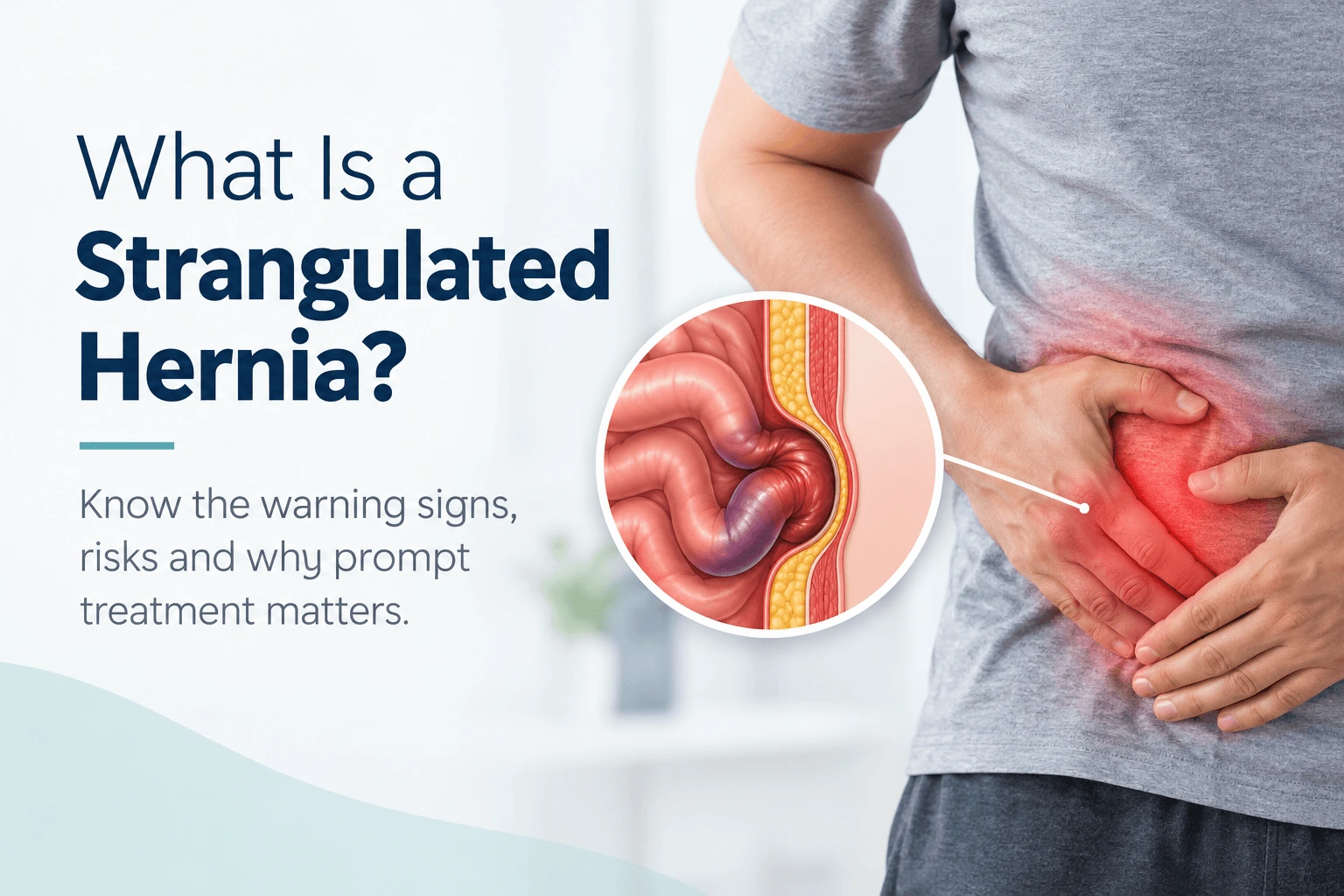
What Is a Strangulated Hernia? Warning Signs You Should Never Ignore
A hernia often appears as a bulge in the abdomen, groin or around the belly button. While some hernias may initially cause little discomfort, complications can develop if the tissue trapped inside the hernia loses its blood supply. This serious condition is known as a strangulated hernia and requires immediate medical attention.
Recognising the warning signs early is important because delayed treatment can lead to tissue damage, intestinal complications and other life-threatening problems.
Dr. Ashish Dhadas at Samata Hospital explains what a strangulated hernia is, its symptoms, how it differs from an ordinary reducible hernia and why emergency treatment may be necessary.
What Is a Strangulated Hernia?
A strangulated hernia occurs when tissue trapped within a hernia loses its blood supply. The trapped tissue may include part of the intestine or other tissue, depending on the type of hernia.
Normally, a hernia develops when tissue pushes through a weak spot in the muscles or connective tissue. In some cases, the protruding tissue becomes stuck and cannot return to its normal position. If the pressure compromises its blood supply, strangulation can occur.
Without prompt treatment, the affected tissue may become damaged or die. If the intestine is involved, serious complications such as bowel perforation, infection and sepsis may develop.
A suspected strangulated hernia is a medical emergency. Do not wait for the symptoms to improve on their own.
What Are the Warning Signs of a Strangulated Hernia?
The symptoms may develop suddenly or worsen over time. The following warning signs require particular attention.
1. Sudden or Severe Abdominal Pain
Pain around the hernia may become intense, persistent or progressively worse. It may occur in the abdomen, groin or around the site of the bulge.
Severe or worsening pain in someone with a known or suspected hernia should be assessed urgently.
2. A Painful, Firm or Swollen Bulge
The hernia may become unusually tender, firm or swollen. A bulge that previously became smaller when lying down may remain stuck.
The skin over the affected area may also appear red, purple, unusually pale or darker than usual.
3. Nausea and Vomiting
Nausea and vomiting may occur when a hernia traps part of the intestine and interferes with its normal function.
These symptoms, particularly when accompanied by abdominal pain or a painful hernia bulge, require emergency medical evaluation.
4. Abdominal Swelling and Bloating
The abdomen may become distended or swollen, especially if the trapped intestine develops a blockage.
Increasing abdominal discomfort or swelling should not be ignored when a hernia is present.
5. Difficulty Passing Stool or Gas
If the trapped intestine becomes obstructed, a person may be unable to pass stool or gas. This can indicate a serious intestinal complication.
When this symptom occurs alongside vomiting, abdominal pain or a swollen hernia, seek emergency care immediately.
Important: You do not need to experience every symptom for a strangulated hernia to be present. If you suspect strangulation, go to the nearest emergency department immediately.
What Is the Difference Between a Hernia, an Incarcerated Hernia and a Strangulated Hernia?
These terms describe different stages or complications of a hernia.
| Condition | What it means |
| Reducible hernia | Tissue protrudes through a weak area in the abdominal wall. The bulge may come and go. |
| Incarcerated hernia | The protruding tissue becomes trapped and cannot return to its normal position. |
| Strangulated hernia | The trapped tissue loses its blood supply, putting it at risk of serious damage. |
An incarcerated hernia is not necessarily strangulated, but it requires prompt medical assessment because strangulation can develop.
What Causes a Hernia to Become Strangulated?
Strangulation can occur when tissue becomes trapped in a narrow opening in the abdominal wall and pressure compromises its blood supply.
Factors associated with hernia development or increased abdominal pressure include:
- Weakness in the abdominal wall.
- Previous abdominal surgery.
- Chronic constipation and repeated straining.
- Persistent coughing.
- Heavy lifting and strenuous physical effort.
- Pregnancy or other factors that increase pressure within the abdomen.
These factors do not mean that a hernia will necessarily become strangulated. The risk depends on the type of hernia and individual circumstances.
How Is a Strangulated Hernia Diagnosed?
A doctor will assess the symptoms, examine the affected area and review the patient’s medical history.
Depending on the situation, investigations may include:
- Physical examination: To assess the location, tenderness and condition of the hernia.
- Blood tests: These may help assess inflammation, infection and other complications. Results must be interpreted alongside the clinical examination and other findings
- Imaging tests: Ultrasound or CT scanning may help identify the hernia and assess suspected intestinal complications when appropriate.
If strangulation is strongly suspected, emergency surgical assessment should not be delayed unnecessarily while waiting for investigations.
How Is a Strangulated Hernia Treated?
A strangulated hernia usually requires emergency surgery. The main aim is to release the trapped tissue, assess its blood supply and repair the weakness in the abdominal wall.
The exact procedure depends on the type of hernia, the affected tissue and the patient’s condition.
Treatment may involve:
- Releasing the trapped tissue: The surgeon frees the tissue or intestine from the constricted area.
- Assessing tissue viability: The surgeon checks whether the affected tissue can recover after its blood supply is restored.
- Removing damaged intestine, if necessary: If a portion of the bowel has suffered irreversible damage, that segment may need to be removed.
- Repairing the hernia: The surgeon determines the appropriate repair technique based on the type of hernia, the condition of the affected tissue and the presence or absence of contamination or infection
Recovery varies according to the severity of the condition, the type of surgery performed and whether intestinal complications have occurred.
Can a Strangulated Hernia Be Prevented?
Not every case can be prevented, but seeking medical advice about a known or suspected hernia can help a doctor assess the risk of complications and discuss appropriate treatment.
Helpful measures include:
- Getting a new or persistent abdominal or groin bulge examined.
- Managing chronic constipation with appropriate dietary and medical advice.
- Seeking treatment for a persistent cough.
- Following medical guidance on lifting and physical activity if you have a hernia.
- Attending recommended follow-up appointments.
Lifestyle measures cannot reliably prevent strangulation in every case. A hernia should not be left unevaluated simply because it causes little pain.
When Should You Visit a Hospital for a Hernia?
Arrange a medical consultation if you notice a new bulge in your abdomen, groin or around your belly button, even if it is not painful.
Seek emergency care immediately if you develop:
- Sudden or severe pain around the hernia.
- A firm, tender or rapidly swelling bulge.
- Red, purple or darkened skin over the bulge.
- Repeated vomiting or increasing abdominal swelling.
- Inability to pass stool or gas alongside abdominal symptoms.
Do not try to force a painful or stuck hernia back into place. Do not wait for a routine appointment if strangulation is suspected.
Conclusion
A strangulated hernia is a serious complication in which the blood supply to trapped tissue is cut off. Severe or worsening pain, a firm and tender bulge, vomiting, abdominal swelling and changes in skin colour are important warning signs.
Early medical assessment of a hernia can help determine the appropriate management and reduce the risk of complications. If strangulation is suspected, seek emergency care rather than waiting for symptoms to settle.
For hernia evaluation and surgical consultation, patients can contact Samata Hospital to learn about the available general and laparoscopic surgical services with Dr. Ashish Dhadas. Suspected strangulation requires immediate emergency care.
Medical disclaimer: This article is intended for general educational purposes and does not replace individual medical consultation, diagnosis or treatment.
Contact Information
2nd Floor, Swara Emerald, Dr R.P. Rd, Tilak Nagar, Dombivli East, Dombivli, Maharashtra 421201
+91 9403890477
Schedule Your Consultation Today – Because your health matters, and expert care is just a call away.
Frequently Asked Questions
Is a strangulated hernia life-threatening?
Yes. A strangulated hernia can become life-threatening if the affected tissue dies or complications such as bowel perforation and sepsis develop. Emergency medical treatment is essential.
Can a strangulated hernia occur without severe pain?
Symptoms can vary, and the absence of severe pain does not reliably exclude a serious complication. A stuck, tender or discoloured hernia bulge, particularly with vomiting or abdominal swelling, needs urgent assessment.
Does every hernia require surgery?
Not every hernia requires immediate surgery. Management depends on the type of hernia, symptoms, individual risk factors and clinical assessment. However, a suspected strangulated hernia requires emergency surgical evaluation.
Can a hernia become strangulated suddenly?
Yes. A hernia may become trapped and lose its blood supply, causing symptoms to develop rapidly. New or worsening symptoms should not be ignored.
Is a strangulated hernia different from a normal hernia?
Yes. In an ordinary reducible hernia,, tissue protrudes through a weak area. In a strangulated hernia, the blood supply to the trapped tissue is compromised, making it a medical emergency.






No Comments
Sorry, the comment form is closed at this time.