
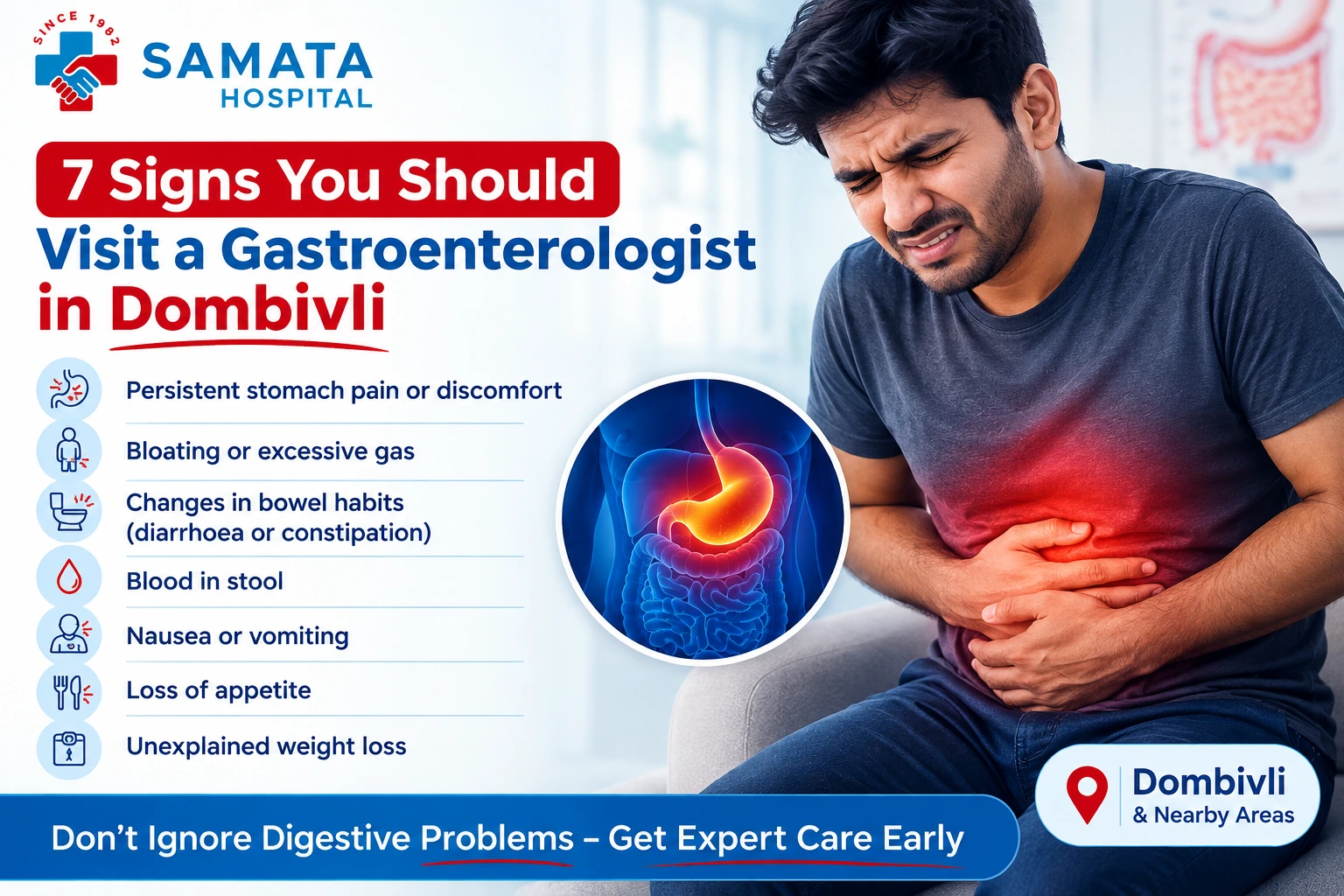
7 Signs You Should Visit a Gastroenterologist in Dombivli
7 Signs You Should Visit a Gastroenterologist in Dombivli
Digestive problems are common and may often be linked to diet, stress, infections or temporary changes in routine. However, when digestive symptoms are persistent, recurring or affecting your daily life, they may require professional evaluation.
A gastroenterologist is a medical specialist who diagnoses and treats conditions affecting the digestive system, including the stomach, intestines, liver, gallbladder and pancreas.
If you are experiencing ongoing digestive problems, knowing when to consult a specialist can help with timely diagnosis and appropriate treatment. Here are 7 signs that you should consider visiting a gastroenterologist in Dombivli.
1. Persistent Abdominal Pain
Occasional stomach discomfort may occur due to indigestion, gas or dietary changes. However, abdominal pain that is persistent, recurrent or becoming more severe should not be ignored.
Pain may occur in different areas of the abdomen and can be associated with conditions such as gastritis, acid reflux, irritable bowel syndrome, gallstones, inflammatory bowel disease or other digestive problems.
A gastroenterologist can assess the location, severity and pattern of your pain and recommend appropriate investigations when required.
2. Frequent Heartburn or Acid Reflux
Occasional heartburn can happen after eating certain foods or having a heavy meal. However, frequent heartburn, acid reflux or a burning sensation in the chest may indicate gastroesophageal reflux disease (GERD).
You may also experience:
- Sour or bitter taste in the mouth
- Regurgitation of food or acid
- Difficulty swallowing
- Chest or upper abdominal discomfort
- Symptoms that worsen after meals or when lying down
If these symptoms occur frequently or interfere with your sleep and daily activities, consulting a gastroenterologist can help identify the underlying cause and determine suitable treatment.
Difficulty swallowing or painful swallowing should be evaluated promptly, particularly when associated with persistent reflux symptoms.
3. Changes in Bowel Habits
A sudden or persistent change in bowel habits can sometimes indicate an underlying digestive problem.
You should consider consulting a gastroenterologist if you experience:
- Persistent constipation
- Frequent diarrhoea
- Alternating constipation and diarrhoea
- Unusual changes in stool consistency
- Urgency or difficulty passing stools
- A persistent feeling of incomplete bowel evacuation
While changes in bowel habits may have simple causes, persistent symptoms require proper evaluation rather than prolonged self-treatment.
4. Blood in Your Stool
Seeing blood in your stool or on toilet paper can be alarming. Although conditions such as piles or anal fissures can cause rectal bleeding, bleeding may also be associated with other gastrointestinal conditions.
The appearance of blood can vary. It may be bright red or appear darker depending on where the bleeding originates.
If you experience unexplained, recurring or significant bleeding, consult a doctor for evaluation. Do not assume that bleeding is caused by piles without getting an appropriate diagnosis.
If you have heavy bleeding, black or tarry stools, vomiting blood, dizziness, fainting or other signs of significant blood loss, seek urgent medical attention rather than waiting for a routine gastroenterology appointment.
5. Unexplained Weight Loss
Losing weight without intentionally changing your diet or exercise routine can sometimes be a warning sign that requires medical attention.
Unexplained weight loss may be associated with several conditions, including digestive disorders that affect appetite, digestion or nutrient absorption.
If unexplained weight loss occurs along with abdominal pain, persistent diarrhoea, vomiting, loss of appetite or changes in bowel habits, consulting a gastroenterologist is particularly important.
6. Persistent Bloating, Gas or Indigestion
Bloating and gas can occur after certain foods or large meals. However, persistent bloating, excessive gas or frequent indigestion may need evaluation when symptoms continue despite dietary changes.
You may experience:
- A feeling of fullness
- Abdominal bloating
- Excessive belching
- Frequent gas
- Indigestion after meals
- Upper abdominal discomfort
These symptoms may have several possible causes, including food intolerance, acid reflux, constipation, functional digestive disorders or other gastrointestinal conditions.
A specialist can help determine whether further evaluation is necessary.
7. Persistent Nausea, Vomiting or Difficulty Swallowing
Occasional nausea or vomiting may occur because of infections, food-related issues or temporary illness. However, persistent or recurrent vomiting requires medical evaluation.
Similarly, difficulty swallowing, also known as dysphagia, should not be ignored. It may feel as though food is getting stuck or taking longer than usual to pass.
Seek medical attention if you experience persistent:
- Nausea
- Vomiting
- Difficulty swallowing
- Pain while swallowing
- Food getting stuck
- Reduced appetite
A gastroenterologist can investigate the underlying cause and recommend appropriate treatment.
When Should You See a Gastroenterologist?
You do not necessarily need to consult a specialist for every episode of indigestion or stomach discomfort. However, professional evaluation is recommended when symptoms are persistent, recurrent, worsening or affecting your quality of life.
You should also seek prompt medical attention for symptoms such as significant gastrointestinal bleeding, severe abdominal pain, persistent vomiting, difficulty swallowing or unexplained weight loss.
Early evaluation can help identify digestive conditions and guide appropriate treatment.
What Does a Gastroenterologist Treat?
A gastroenterologist specialises in conditions affecting the digestive system. Depending on the symptoms, they may evaluate and manage conditions such as:
- Acid reflux and GERD
- Gastritis
- Peptic ulcers
- Irritable bowel syndrome (IBS)
- Inflammatory bowel disease
- Constipation and diarrhoea
- Liver and gallbladder disorders
- Pancreatic conditions
- Gastrointestinal bleeding
- Other digestive disorders
The exact treatment depends on the diagnosis and individual patient requirements.
What to Expect During a Gastroenterology Consultation?
During your consultation, the gastroenterologist may ask about your symptoms, diet, medical history, medications and bowel habits.
Depending on your symptoms, the doctor may recommend blood tests, imaging, endoscopy, colonoscopy or other investigations.
These tests are not required for every patient. The appropriate investigations are determined based on your symptoms and clinical assessment.
Looking for a Gastroenterologist in Dombivli?
If you are experiencing persistent digestive symptoms, consulting an experienced gastroenterologist in Dombivli can help you understand the possible cause and receive appropriate medical guidance.
At Samata Hospital, Dombivli, patients can consult the gastroenterology team for evaluation and management of digestive health concerns.
Do not ignore persistent abdominal pain, changes in bowel habits, frequent acidity, unexplained weight loss or other recurring digestive symptoms.
Book a consultation with a gastroenterologist in Dombivli and take the right step towards better digestive health.
Frequently Asked Questions
When should I see a gastroenterologist?
You should consider seeing a gastroenterologist when digestive symptoms such as abdominal pain, acid reflux, bowel changes, bloating, bleeding or unexplained weight loss are persistent, recurring or affecting your daily life.
What does a gastroenterologist treat?
A gastroenterologist diagnoses and treats conditions affecting the digestive system, including the stomach, intestines, liver, gallbladder and pancreas.
Is frequent acidity a reason to see a gastroenterologist?
Frequent or persistent acidity and heartburn may require evaluation, particularly if symptoms interfere with sleep or daily activities or do not improve with basic measures.
Is blood in stool always caused by piles?
No. Although piles can cause rectal bleeding, several other conditions can also cause blood in the stool. Persistent or unexplained bleeding should be evaluated by a medical professional.
How can I find a gastroenterologist in Dombivli?
Look for a qualified gastroenterologist with appropriate experience and access to diagnostic facilities. A hospital-based consultation can also provide access to investigations and follow-up care when required.






No Comments
Sorry, the comment form is closed at this time.