
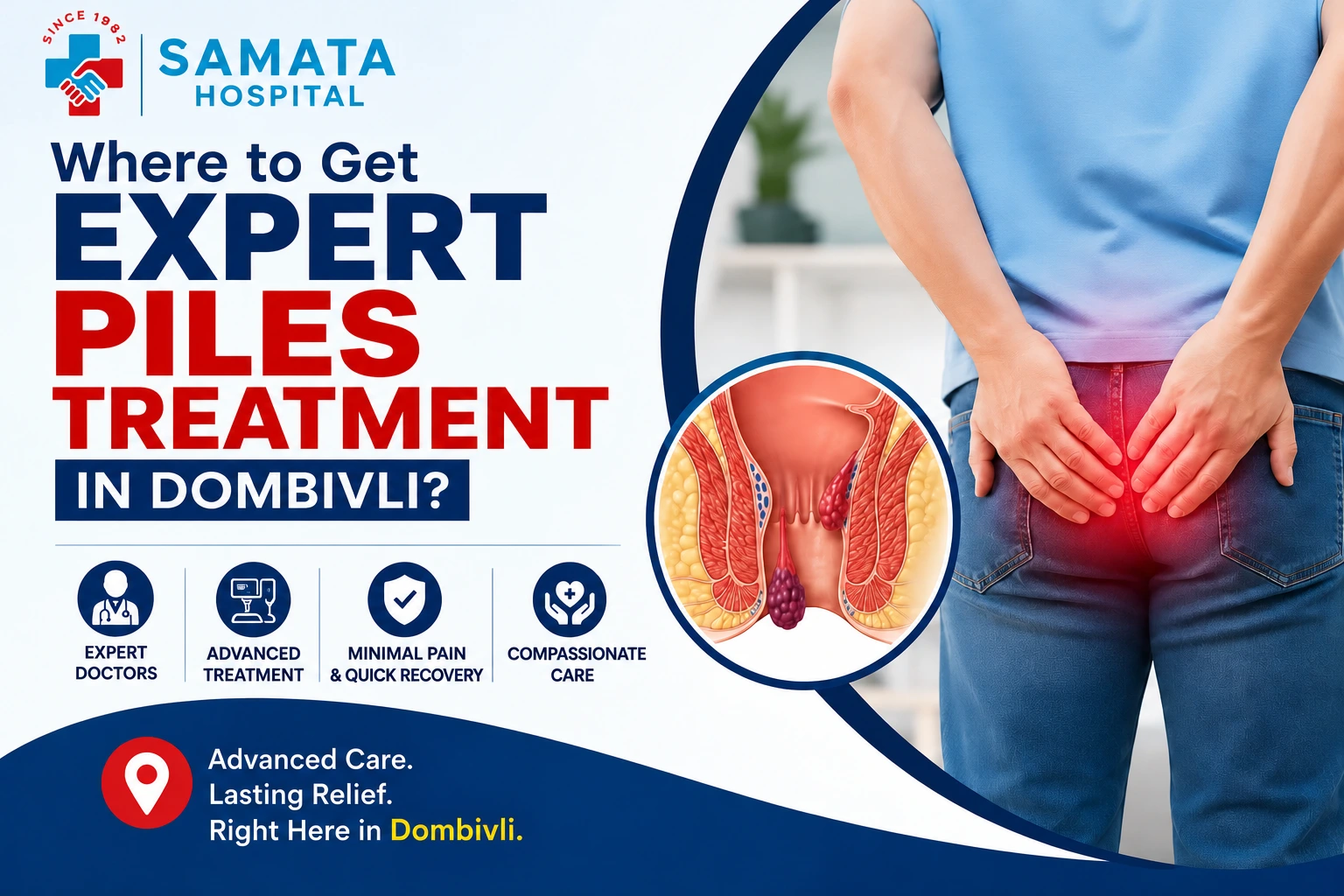
Where to Get Expert Piles Treatment in Dombivli?
Where to Get Expert Piles Treatment in Dombivli?
Piles, medically known as haemorrhoids, are a common condition affecting people of different age groups. They develop when the blood vessels in and around the anus and lower rectum become swollen and inflamed. Symptoms can include bleeding during bowel movements, itching, pain, swelling and discomfort while sitting.
While mild piles may sometimes improve with dietary and lifestyle changes, persistent or recurring symptoms should not be ignored. If you are looking for Piles Treatment in Dombivli, consulting a qualified specialist can help identify the severity of the condition and determine the most appropriate treatment.
At Samata Hospital, Dombivli, patients can seek professional medical evaluation and discuss suitable treatment options based on their symptoms and individual health needs.
What Are Piles?
Piles, or haemorrhoids, are swollen blood vessels that develop inside the rectum or around the anus. They are broadly classified into two types: internal piles, which develop inside the rectum, and external piles, which develop under the skin around the anus.
Piles can occur due to increased pressure on the blood vessels in this area. Factors such as constipation, excessive straining, prolonged sitting and a low-fibre diet can increase the risk of developing piles.
Although piles are generally treatable, delaying medical consultation when symptoms persist may allow the condition to become more uncomfortable or recurrent.
What Are the Common Symptoms of Piles?
The symptoms of piles can vary depending on their type and severity. Common symptoms include:
- Bright red bleeding during or after bowel movements
- Pain or discomfort around the anus
- Itching or irritation
- Swelling around the anal area
- A lump near the anus
- Discomfort while sitting
- Difficulty or discomfort while passing stools
Rectal bleeding should not always be assumed to be caused by piles. Other medical conditions can also cause similar symptoms. Therefore, repeated or unexplained bleeding should be evaluated by a doctor.
What Causes Piles?
Several factors can contribute to the development of piles. Common causes and risk factors include:
Constipation
Hard stools and difficulty passing stools can lead to repeated straining, increasing pressure on the veins in and around the anus.
Excessive Straining
Straining during bowel movements can contribute to the development or worsening of haemorrhoids.
Low-Fibre Diet
Not consuming enough fibre may contribute to constipation and harder stools. A balanced, fibre-rich diet can support regular bowel movements.
Prolonged Sitting on the toilet
Spending long periods sitting on the toilet, particularly while straining or waiting for a bowel movement, may increase the risk of haemorrhoids.
Pregnancy
Pregnancy can increase pressure around the pelvic region and may increase the likelihood of developing haemorrhoids.
Sedentary Lifestyle
Limited physical activity may contribute to constipation and factors associated with piles.
When Should You See a Doctor for Piles?
Occasional mild discomfort may not always require immediate medical treatment. However, you should consult a doctor if you experience:
- Repeated rectal bleeding
- Persistent or severe pain
- Swelling or a lump around the anus
- Recurring piles
- Symptoms that do not improve with lifestyle changes
- Difficulty passing stools
- Symptoms that affect your daily activities
A timely evaluation can help determine whether the symptoms are caused by piles or another condition requiring treatment.
Seek urgent medical attention if you have heavy rectal bleeding, severe anal pain with bleeding, fever, significant abdominal pain, dizziness or fainting.
How Are Piles Diagnosed?
Diagnosis generally begins with a discussion about your symptoms, medical history and bowel habits. The doctor may perform a physical examination to assess the affected area.
Depending on the symptoms, additional examinations or investigations may be recommended. Proper diagnosis is important because conditions such as anal fissures, fistulas and other colorectal problems can sometimes cause symptoms similar to piles.
Once the condition has been assessed, the doctor can recommend an appropriate treatment plan.
What Are the Treatment Options for Piles?
The treatment for piles depends on factors such as the type and severity of haemorrhoids, symptoms and overall health.
Lifestyle Changes
For mild cases, lifestyle changes may help manage symptoms. These can include increasing dietary fibre, drinking adequate fluids, avoiding excessive straining and maintaining regular physical activity.
Managing constipation is particularly important for reducing pressure during bowel movements.
Medicines
Depending on the symptoms, a doctor may recommend medicines to manage pain, itching, swelling or constipation. Medicines should be taken according to professional medical advice.
Minimally Invasive Procedures
Patients with persistent or more advanced piles may require a minimally invasive procedure. The choice of procedure depends on the patient’s condition and should be determined after a clinical evaluation.
Surgical Treatment
Some patients with advanced, recurrent or symptomatic piles may require surgery. Surgery is not necessary for every patient, and the decision depends on the severity of the condition and response to other treatment options.
Why Choose Expert Piles Treatment in Dombivli?
Choosing the right healthcare provider is important when seeking Piles Treatment in Dombivli. A professional evaluation can help ensure that the treatment is based on the patient’s actual condition rather than symptoms alone.
Important factors include:
- Proper diagnosis and clinical evaluation
- Experienced medical professionals
- Personalised treatment planning
- Access to appropriate treatment options
- Follow-up and recovery guidance
- A comfortable and confidential environment
At Samata Hospital, Dombivli, patients can consult the medical team for evaluation of piles symptoms and guidance regarding suitable treatment options.
How Can You Prevent Piles?
Certain lifestyle habits can help reduce the risk of developing piles or prevent symptoms from worsening.
Eat a fibre-rich diet: Include fruits, vegetables, whole grains and other fibre-rich foods in your daily diet.
Stay hydrated: Adequate fluid intake can help maintain softer stools and regular bowel movements.
Avoid straining: Do not force bowel movements or spend excessive time sitting on the toilet.
Stay physically active: Regular physical activity can support healthy digestion and bowel function.
Manage constipation: Persistent constipation should not be ignored. Consult a healthcare professional if dietary and lifestyle changes are not sufficient.
Get Expert Piles Treatment in Dombivli
Piles are a treatable condition, but persistent bleeding, pain, swelling or recurring symptoms should not be ignored. Getting an early medical evaluation can help identify the cause of your symptoms and determine the most appropriate treatment.
If you are searching for Piles Treatment in Dombivli, consult the medical team at Samata Hospital for professional evaluation and personalised treatment guidance.
Book an Appointment for Piles Treatment in Dombivli.
Frequently Asked Questions
Who should I consult for piles treatment in Dombivli?
A qualified general surgeon, colorectal surgeon or appropriately trained specialist can evaluate piles and recommend treatment based on the condition.
Can piles be treated without surgery?
Yes, some mild cases can improve with lifestyle changes, constipation management and medicines. However, advanced or recurring cases may require a procedure or surgery.
When is piles surgery required?
Surgery may be considered for selected patients with advanced, recurrent or persistent piles when other treatment options are not suitable or have not provided adequate relief.
Is laser treatment suitable for all piles patients?
No. Treatment suitability depends on the type and severity of piles. A doctor should evaluate the condition before recommending laser or another procedure.
How much does piles treatment cost in Dombivli?
The cost varies depending on the severity of piles, treatment method, investigations and other individual requirements. A consultation is recommended for an accurate treatment plan and cost estimate.



No Comments
Sorry, the comment form is closed at this time.