
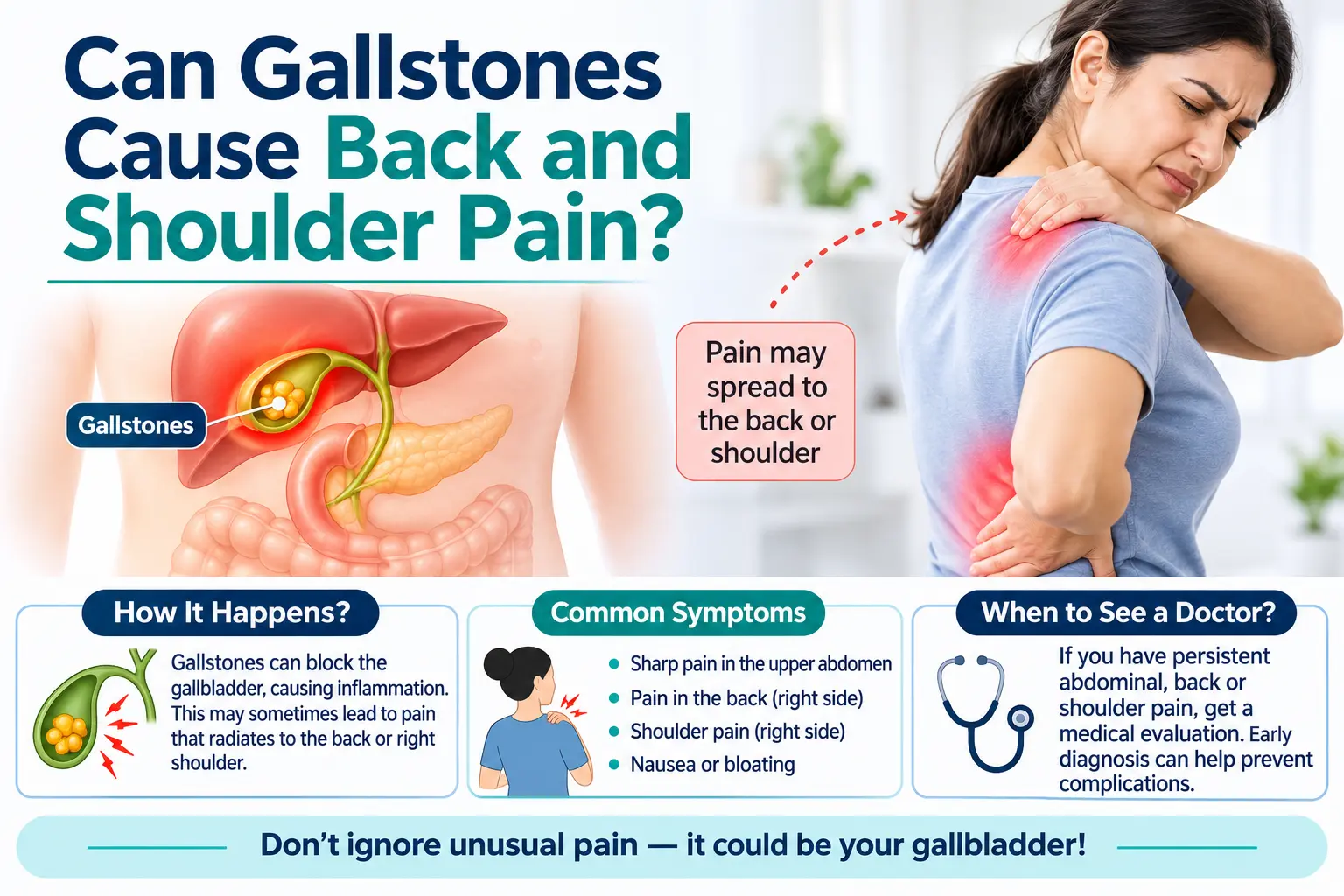
Can Gallstones Cause Back and Shoulder Pain?
Many people assume gallstones only cause stomach pain. In reality, they can also cause aching in the upper back or the right shoulder, which is why the problem is often mistaken for a muscle strain, acidity or a heart complaint.
Gallstones are hardened deposits of cholesterol or bile pigments that form in the gallbladder, a small organ under the liver that stores bile for digesting fats. Many stones cause no symptoms at all. When they block a bile duct, however, they can trigger sudden, intense pain that does not always stay in the abdomen. If you are looking for the best gallbladder doctor in Dombivli, understanding these warning signs is the first step.
Why Do Gallstones Cause Back and Shoulder Pain?
This happens because of referred pain. The gallbladder shares sensory nerve pathways with areas around the right shoulder and shoulder blade. When the gallbladder becomes inflamed or irritated, pain signals can sometimes be perceived in these areas rather than being felt only in the abdomen.
Typical patterns include:
- Pain in the right shoulder or shoulder blade
- Aching between the shoulder blades
- A dull ache in the upper-right back
Common Symptoms Linked to Gallstone Pain
Back or shoulder pain from gallstones usually comes with other symptoms:
- Pain in the upper right or centre of the abdomen, often after a fatty meal
- Pain lasting from 30 minutes to a few hours, sometimes occurring after meals.
- Nausea and vomiting
- Bloating, belching or indigestion
- Pain that comes in episodes rather than constantly
Muscular back or shoulder pain may worsen with movement, pressure or changes in posture. Gallstone-related pain is generally less affected by movement and may occur after meals. However, these patterns can overlap, so a medical evaluation is necessary to identify the cause.
Gallstone Pain vs Muscle Pain: How to Tell the Difference
| Feature | Gallstone-related pain | Muscle/posture pain |
| Trigger | May occur after meals, particularly heavy or fatty meals | Movement, lifting, poor posture |
| Location | Right shoulder, upper back, plus abdomen | Specific muscle area |
| Other symptoms | Nausea, vomiting, bloating | Usually none |
| Relief with rest or stretching | Unlikely | Often yes |
This table is a general guide only. Only a proper examination and imaging can confirm the cause.
When to See a Doctor Urgently
Seek immediate medical care if back or shoulder pain comes with:
- Persistent or severe abdominal pain lasting several hours, particularly if it is worsening.
- Fever or chills
- Yellowing of the skin or eyes (jaundice)
- Dark urine or pale stools
- Persistent nausea or vomiting
These symptoms may indicate complications such as inflammation of the gallbladder (cholecystitis), infection of the bile ducts or pancreatitis, and require prompt medical evaluation.
Sudden shoulder or back pain accompanied by chest discomfort, breathlessness, sweating or faintness requires emergency assessment. Do not assume such symptoms are caused by gallstones.
How Are Gallstones Diagnosed?
A specialist will usually begin with your history and an examination.
An abdominal ultrasound is the most common test and detects most gallstones.
Blood tests may check for infection or liver involvement, and additional imaging may be advised in some cases.
MRI-based imaging (MRCP) may be recommended when doctors suspect stones in the bile ducts.
Treatment Options
Treatment depends on your symptoms and the severity of the condition.
Stones that cause no symptoms generally do not require treatment, although certain patients with specific risk factors or complications may need further evaluation and treatment.
For symptomatic gallstones, the standard treatment is laparoscopic cholecystectomy, a minimally invasive keyhole surgery to remove the gallbladder. It generally involves small incisions and a shorter recovery than open surgery. You can live a normal life without a gallbladder, though your surgeon will advise on dietary adjustments.
Why Choose Samata Hospital?
Choosing the right specialist matters. A good gallbladder doctor will take your symptoms seriously, explain your diagnosis clearly and recommend surgery only when it is needed. At Samata Hospital in Dombivli East, patients receive a careful evaluation and a personalised plan for their condition.
Case Study of the Sucess Story
Aniket, 46, an office worker, had been treating “shoulder pain” for months.
He noticed a nagging ache in his right shoulder and upper back, especially at night. He used pain balms and assumed it was from long hours at his desk. Over time, he also noticed bloating and discomfort after oily meals, but he put it down to acidity.
After one severe episode that woke him up with pain and nausea, he consulted a gallbladder specialist. An ultrasound showed multiple gallstones.After clinical evaluation, his doctor concluded that the shoulder pain was likely referred to as pain associated with his symptomatic gallstones rather than a muscular problem and his doctor recommended laparoscopic surgery. He recovered well and returned to routine activities within days, and his shoulder pain did not return.
Conclusion
Yes, gallstones can cause back and shoulder pain through referred pain, especially in the right shoulder and upper back. If you have recurring pain along with nausea, bloating or discomfort after meals, do not self-treat. Early diagnosis can help identify complications and ensure timely treatment.
Contact Information
2nd Floor, Swara Emerald, Dr R.P. Rd, Tilak Nagar, Dombivli East, Dombivli, Maharashtra 421201
+91 9403890477
Schedule Your Consultation Today – Because your health matters, and expert care is just a call away.
Frequently Asked Questions
1. Can gallstones cause right shoulder pain?
Yes. Gallbladder irritation can send referred pain to the right shoulder or shoulder blade, often along with abdominal pain, nausea or bloating.
2. Can gallstones cause upper back pain without stomach pain?
It is possible. Some people feel gallstone pain mainly in the upper back or between the shoulder blades, though digestive symptoms usually appear too. A medical evaluation is needed to confirm the cause.
3. How long does gallstone pain last?
An attack typically lasts from about 30 minutes to a few hours. Persistent or severe pain, especially when accompanied by fever, chills or jaundice, requires urgent medical attention.
4. Do all gallstones need surgery?
No. Stones that cause no symptoms are often just monitored. Surgery is usually recommended when they cause repeated pain or complications.
5. How do I find the gallbladder doctor in Dombivli?
Look for a doctor who offers proper diagnostic evaluation, explains your options clearly and has experience with minimally invasive procedures. You can book a consultation at Samata Hospital



No Comments
Sorry, the comment form is closed at this time.